The Science
Precision in Restoration
REVIRA ONE™ translates decades of neuromodulation research into real-world use by combining multi-day wear, automated stimulation, and engagement of multiple neural territories in a single non-invasive wearable experience.
Foundation
The Evolution of Neuromodulation
For decades, clinically studied percutaneous and implantable neuromodulation systems have utilized extended multi-day wear protocols, programmed stimulation and recovery cycles, and engagement of multiple neural pathways.
More recently, non-invasive stimulation technologies have demonstrated the ability to engage nerve-associated pathways without needles or implanted components.
REVIRA ONE was inspired by principles demonstrated across both worlds, combining multi-day wear, intermittent stimulation cycles, engagement of multiple nerve territories, automated protocols, and non-invasive delivery into a wearable system designed for real-world use.

Neural Anatomy
Why Has the Ear Attracted Scientific Interest?
The ear is one of the most neurologically unique areas of the human body, containing overlapping sensory territories supplied by multiple cranial and cervical nerve branches, providing access to pathways that influence communication between the body and the nervous system.
A New Perspective on Neural Wellness
Modern life places the nervous system under constant demand. Work pressures, caregiving responsibilities, family obligations, and everyday stressors can leave many women feeling perpetually "on." REVIRA was created around the belief that supporting the interconnected systems of the nervous system, including recovery, resilience, sleep, emotional well-being, and physical comfort, may help women feel more balanced, resilient, and prepared for the demands of daily life.
Design Principle
The Left Ear
Precision by Design
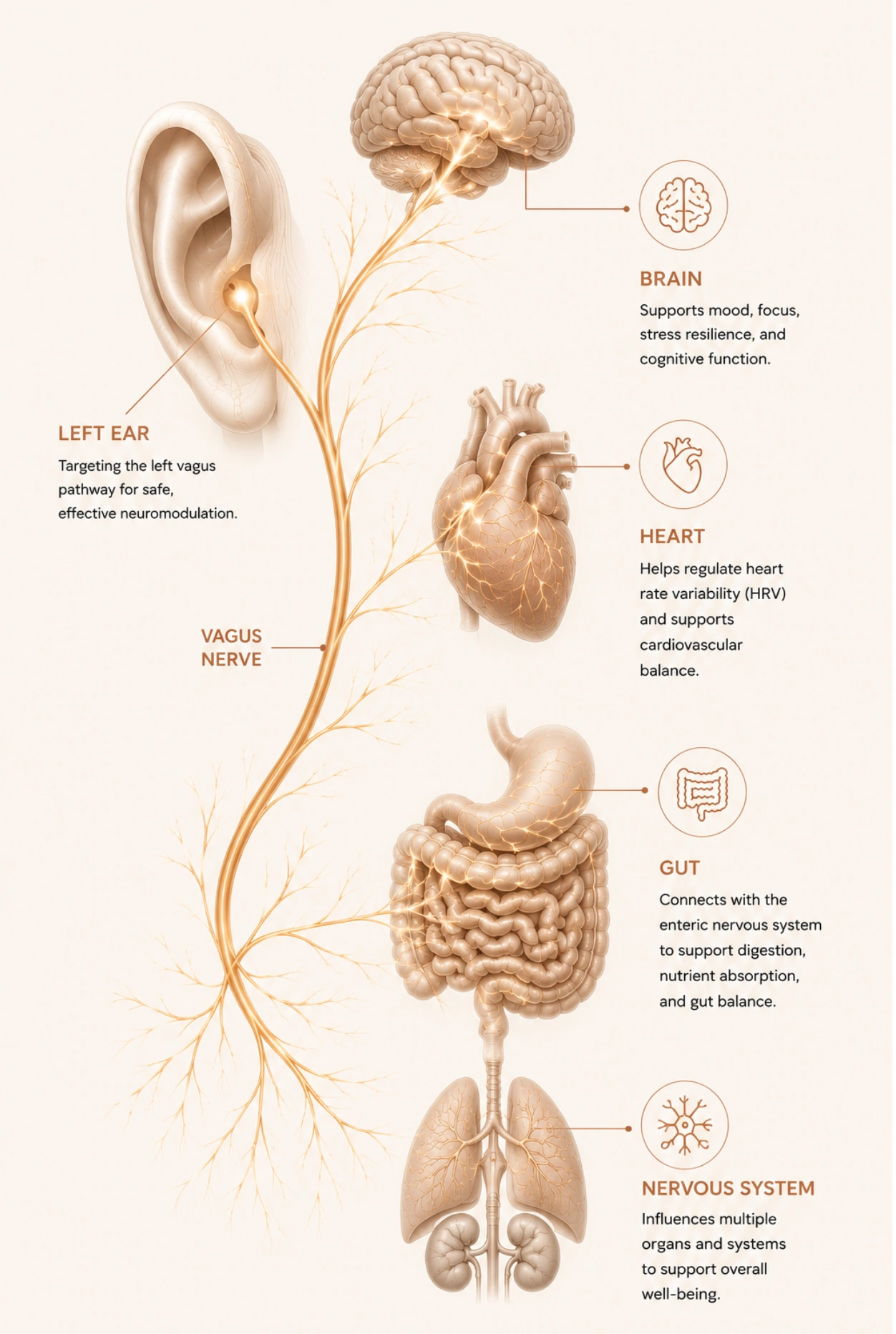
REVIRA ONE™ was intentionally engineered for the left ear, guided by the precise anatomy of the vagus nerve and clinically established neuromodulation principles.
As the body's longest and most complex neural superhighway, the vagus nerve acts as the master volume control for your parasympathetic "rest and digest" system, linking the brain directly to the heart, gut, and major organs. Because this pathway is so powerful, precision is everything:
The Right Vagus has a strong, direct connection to the heart's natural pacemaker. Because stimulating this side can directly alter heart rate, clinical therapies strictly avoid right-sided stimulation.
The Left Vagus safely bypasses the heart's primary pacemaker. Instead, its branches project upward to the brain and downward to the enteric nervous system (your gut), supporting optimal gut-brain communication, autonomic regulation, and overall balance.
By targeting the left ear, REVIRA ONE™ utilizes an anatomy-informed approach, tapping directly into a safe, validated wellness pathway to support everyday calm, recovery, resilience, and nervous system balance.
Four Territories
The Four Neural Zones
Zone A
Auriculotemporal Nerve (ATN)
Directly in front of the ear canal opening, supplying the tragus and tracking upward into the temple.
Physical Tension & Jaw Clenching
Stress is often experienced physically as well as emotionally. Many women unconsciously hold tension in the jaw, face, neck, and scalp. The ATN is directly connected to the sensory pathways serving these regions, engaging this territory addresses the neurological roots of facial tension and stress-induced discomfort.
Zone B
Lesser Occipital Nerve (LON)
At the base of the skull, traveling vertically upward along the back ridge of the ear cartilage.
Cognitive Fatigue & Upper-Neck Tension
When hormones fluctuate or stress mounts, structural and chemical changes can result in upper neck tension and the heavy feeling of mental exhaustion. The LON pathway addresses Mental Clarity, Neck Release, and Cognitive Grounding, sending ascending sensory signals that lift the cloud of mental fatigue.
Zone C
Auricular Branch of the Vagus Nerve (ABVN)
Inside the deep, inner hollow of the ear cavity (the concha), next to the opening of the ear canal.
Vagal Withdrawal & Sleep Architecture
The parasympathetic network is the body's "rest and restore" system. When its influence decreases due to life transitions or hyperarousal, individuals feel less resilient and experience disrupted sleep. The outer ear provides a unique, non-percutaneous point of access to this vital regulatory network.
Zone D
Greater Auricular Nerve (GAN)
Originates in the upper neck below the jawline and sweeps upward to cover the earlobe and lower cartilage ridge.
Temperature Regulation & Autonomic Balance
Hormonal transitions can influence temperature perception and overall well-being. Vasomotor symptoms, such as hot flashes and night sweats, reflect the nervous system's heightened reactivity. The GAN communicates closely with the cervical nerve pathways monitoring core temperature, contributing to autonomic regulation.
Clinical Foundations
The Science of Cumulative Training
True resilience isn't built in quick, on-demand sessions. While short stimulation can provide brief, temporary relief, shifting your nervous system's default state from chronic stress to calm requires a deeper physiological approach.
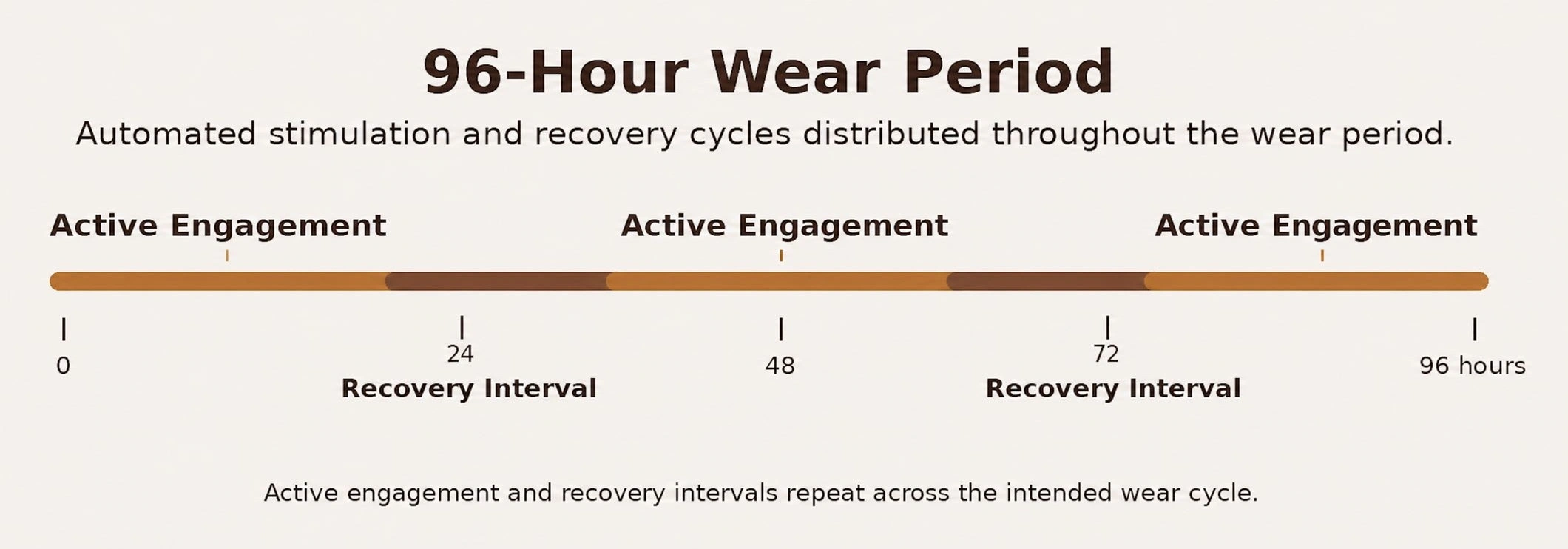
Automated stimulation and recovery cycles distributed throughout the 96-hour wear period.
Preventing Brain "Tuning Out" (Habituation)
The brain is highly adaptive; if a stimulus is constant and unvarying, the nervous system quickly ignores it. To prevent this, REVIRA ONE™ uses smart, pre-programmed cycles that automatically alternate between active micro-stimulation and precise recovery intervals, keeping your nerves responsive.
The Autonomic "Carryover Effect"
In clinical neurobiology, the most profound changes occur between active stimulation periods. Structured, low-frequency inputs trigger chemical cascades in the brainstem that persist during "off" cycles, progressively training your baseline heart rate variability (HRV) to stay elevated.
Neuroplastic Remodeling
Just like building physical muscle, remodeling autonomic pathways requires consistent, low-friction exposure over days rather than minutes. The 96-hour wear period provides the brain with the sustained, repetitive inputs necessary to physically build and reinforce lasting neural pathways of calm.